 Vithupro Infotech
GraphRAG and knowledge graphs
Cited answers across thousands of documents, using a knowledge graph where plain vector search falls short.
The problem we solve
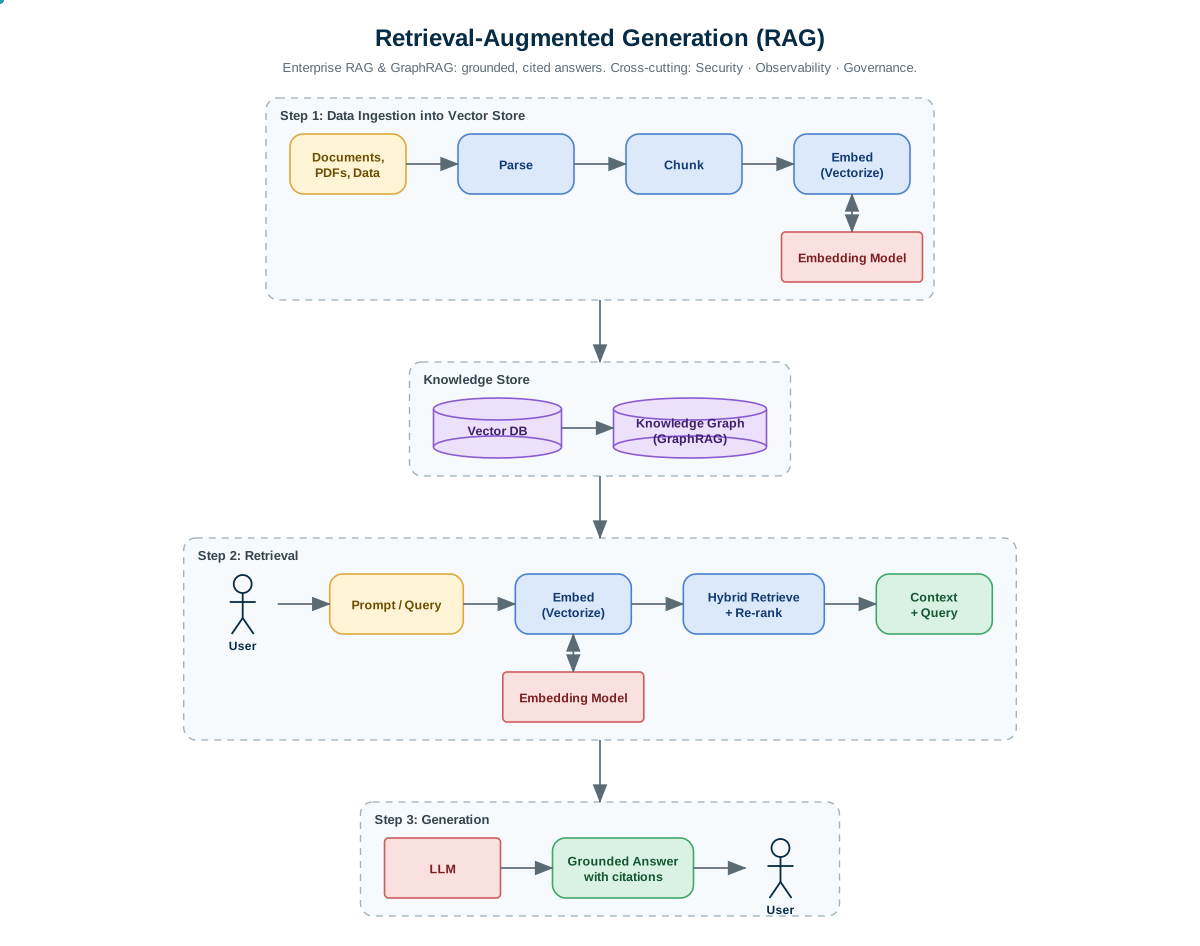
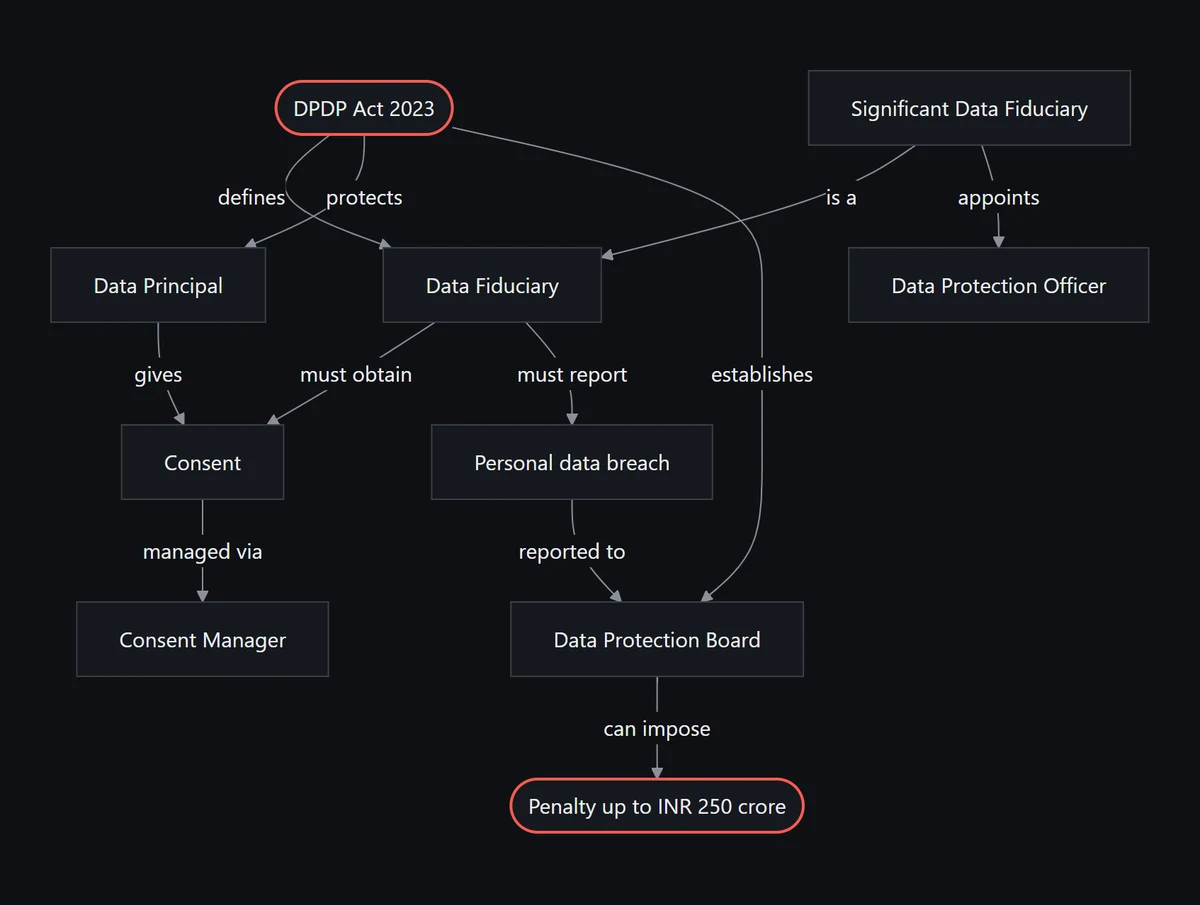
Vector search finds passages that look similar. It struggles with questions that span documents, depend on relationships, or need an exact clause or code. A knowledge graph of entities and their links, combined with hybrid search and re-ranking, fixes that and makes every answer traceable to its source.
Confident wrong answers
The model fills gaps when retrieval misses the right passage.
Questions across documents
Who supplies what, which clause overrides which: relationships vector search cannot see.
No way to verify
Answers without citations cannot be trusted in legal, finance or support work.
What we build
Knowledge graph construction
- Ontology and schema design with your domain experts
- LLM-based entity and relationship extraction
- Entity resolution and de-duplication
- Incremental updates as documents change
Retrieval
- Hybrid search: BM25, vectors and graph traversal
- Microsoft GraphRAG local and global search, LightRAG
- Text-to-Cypher for structured questions
- Cross-encoder re-ranking
Grounding
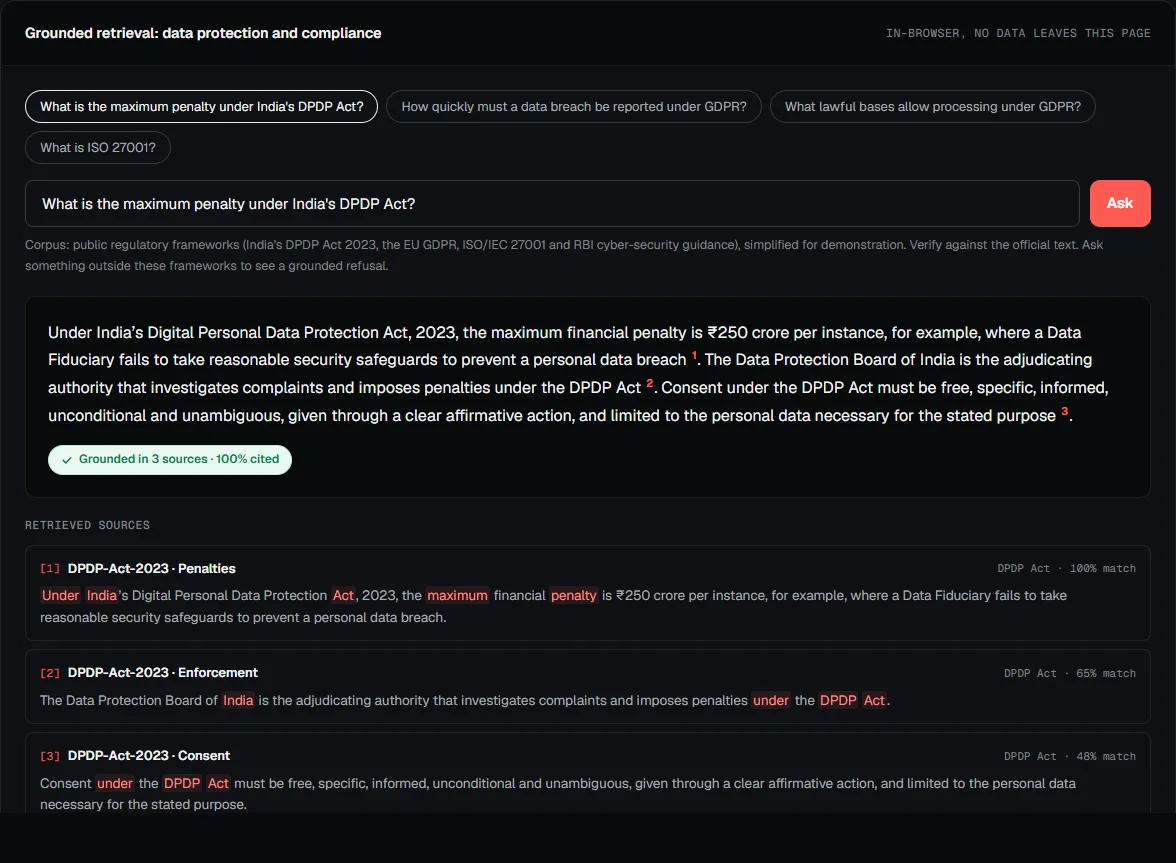
- Citations to page, clause or node
- Refusal when the sources do not support an answer
- Permission-aware retrieval per user and team
- Multilingual corpora
Evaluation
- Golden question sets from real usage
- Faithfulness, context recall and answer correctness scoring
- Plain RAG versus GraphRAG comparisons on your data
- Regression checks on every change
What this looks like when we build it
The stack
Go deeper on the tools:
How we deliver it
Retrieval assessment
2 weeks. Your documents, a golden question set, a measured baseline and a recommended design.
Production build
4 to 8 weeks. Graph, hybrid retrieval, cited answers, access control and an admin view.
Run and improve
Monthly. New sources, ontology updates, eval tracking and tuning.
Questions
Do we need GraphRAG, or is normal RAG enough?
Often hybrid search plus re-ranking is enough, and we will tell you so. GraphRAG earns its cost when questions span many documents or depend on relationships between entities. We measure both on your data before you commit.
Which graph database do you use?
Neo4j in most projects, for its Cypher query language, vector index and tooling. Memgraph or Amazon Neptune when performance or your cloud setup points there.
Can it respect document permissions?
Yes. Access rules are applied at retrieval time, so users only get answers from content they are allowed to see.
Related services
Have an AI system to build?
Tell us what it needs to do. We reply within one business day with questions, a rough plan and the next step.
- Free 30-minute architecture call
- NDA before you share details
- You own all code and IP
- Reply within one business day